A Guide to Ear Piercing Placement
Thinking about getting an ear piercing but not sure which one to choose? From classic lobe piercings to a bold helix or conch, each placement creates a different look. The right choice depends on your style, ear anatomy, jewellery preferences and how much aftercare you’re prepared to commit to.
At TATTOOED Budapest, located at Bástya utca 19 in Budapest’s city centre, we help clients choose piercings that suit their individual style and anatomy.
1. Lobe Piercing — The Classic Choice
A lobe piercing is one of the most popular options for both first-timers and experienced piercing enthusiasts. It is placed in the soft, fleshy part of the earlobe and offers plenty of styling possibilities.
You can wear a single stud, a hoop or several earrings arranged along the lobe. Multiple lobe piercings also make it easy to create a personalised ear stack.
Best for: beginners, minimalist jewellery and layered ear styling.
2. Helix Piercing — A Modern Cartilage Piercing
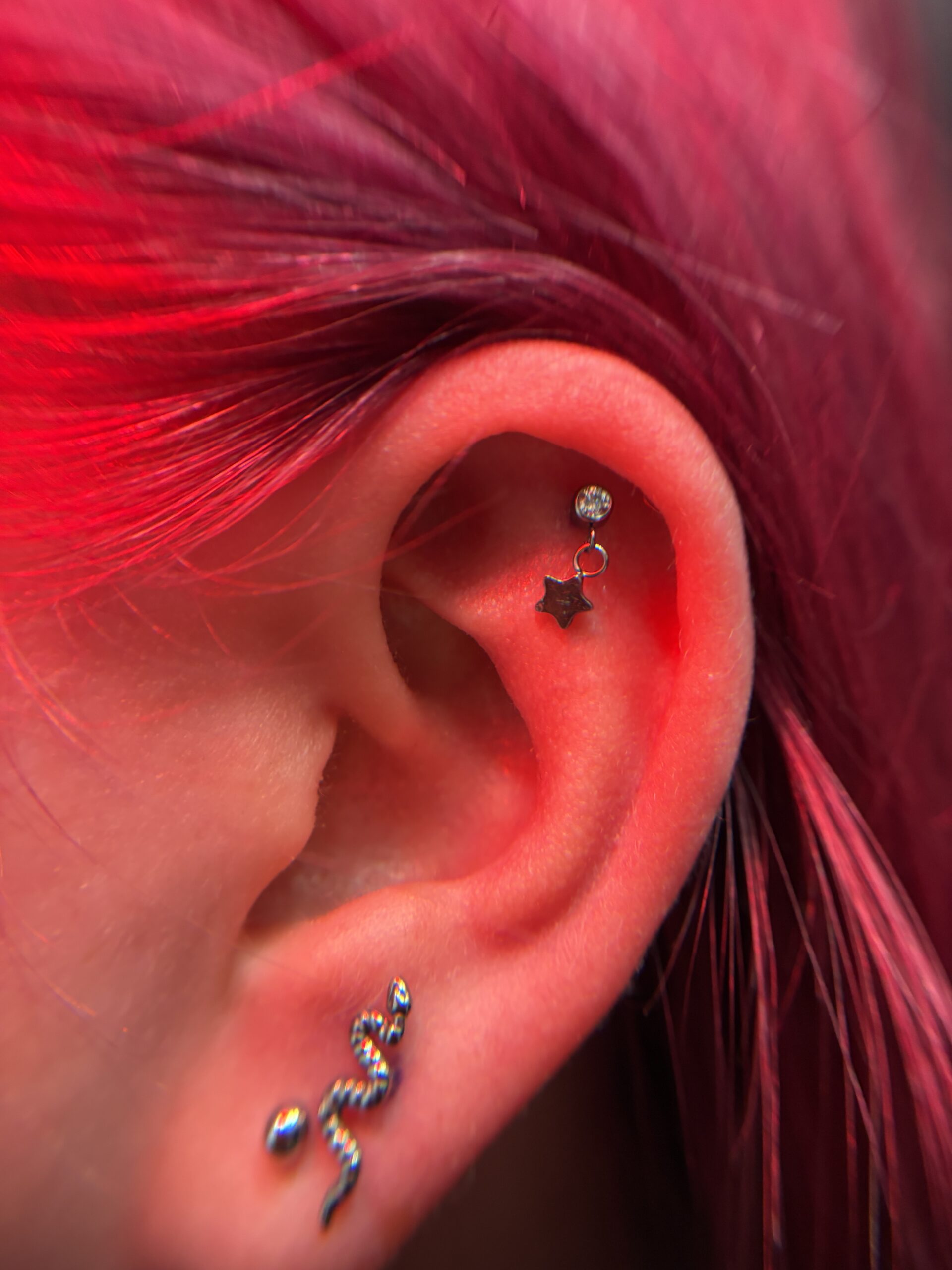
A helix piercing is placed through the upper outer cartilage of the ear. It can look subtle with a small stud or more expressive with a hoop once the piercing has healed sufficiently for that jewellery.
Healing takes longer than with a typical lobe piercing because cartilage has a different blood supply. Sleeping on the piercing, pressure from headphones and frequent touching can irritate it.
Best for: a clean, modern look and combining several ear piercings.
3. Conch Piercing — A Statement in the Centre of the Ear
The conch piercing is located in the central bowl-shaped area of the ear cartilage. Depending on the placement and jewellery, it can create a distinctive look without needing several separate piercings.
A flat-back stud is often used initially. A hoop may be an option later, depending on your anatomy and healing progress.
Best for: a distinctive look, statement studs and curated ear combinations.
4. Tragus Piercing — Small but Noticeable
The tragus is the small piece of cartilage in front of the ear canal. A tragus piercing can be discreet while adding an interesting detail to your overall look.
Because of its position, it may be affected by in-ear headphones, earbuds and pressure during sleep. Your piercer should assess whether your anatomy is suitable before proceeding.
Best for: subtle details and minimalist jewellery.
5. Daith Piercing — An Inner Cartilage Detail
A daith piercing passes through the fold of cartilage just above the ear canal. Its tucked-away position makes it visually different from more exposed ear piercings.
The anatomy of this fold varies from person to person, so not everyone is a suitable candidate. Healing can take several months or longer, and the area needs careful aftercare.
Best for: a distinctive inner-ear look and compact jewellery.
6. Rook Piercing — For a More Unusual Look
A rook piercing is placed through the raised fold of cartilage in the upper inner ear. It is a popular option for people who want something less conventional than a standard helix.
The fold must be sufficiently developed to support the piercing safely. A professional assessment is essential before choosing this placement.
Best for: a unique ear composition and curved-barbell jewellery.
How Do You Choose the Right Ear Piercing?
Before deciding, consider these four factors:
- Your ear anatomy. Not every piercing is suitable for every ear. The available cartilage, folds and thickness influence which placements are possible.
- Your everyday routine. Headphones, helmets, sleeping positions and sports can affect comfort and healing.
- Your jewellery style. Think about whether you prefer discreet studs, hoops or a combination of different pieces.
- Healing time. Earlobe piercings generally heal faster than cartilage piercings. Cartilage healing can take many months, sometimes a year or longer.
Your piercer can assess your anatomy and explain which placement and initial jewellery are appropriate for you.
How Long Does an Ear Piercing Take to Heal?
Healing time varies by placement, individual anatomy and aftercare. Earlobe piercings often take around 6–8 weeks or longer, while cartilage piercings commonly require 6–12 months or more.
A piercing can look healed on the outside before the tissue inside has fully recovered. Do not change the jewellery simply because the area looks normal. Ask a qualified piercer to assess healing and advise when a jewellery change is appropriate.
How Should You Care for a New Piercing?
Good aftercare helps reduce irritation and supports healing.
- Clean the piercing with sterile saline wound wash suitable for piercing aftercare.
- Wash your hands before touching the area.
- Do not twist, rotate or unnecessarily move the jewellery.
- Avoid sleeping directly on a healing cartilage piercing.
- Avoid alcohol, hydrogen peroxide and harsh cleaning products on the piercing.
- Do not remove jewellery yourself if you suspect an infection. Seek advice from a healthcare professional.
Increasing pain, significant swelling, spreading redness, unusual discharge or fever can indicate a complication. Cartilage infections can be particularly serious, so seek prompt medical attention if these symptoms occur.
Get Your Ear Piercing in Budapest
Choosing a piercing is about more than following a trend. The right placement should suit your anatomy, personal style and everyday life.
At TATTOOED Budapest, Bástya utca 19, we offer professional piercing services in a modern studio in Budapest’s city centre, within easy reach of Váci utca.
Not sure whether a helix, conch, tragus or classic lobe piercing is right for you? Visit the studio for a professional assessment and personalised guidance.
Explore our piercing services and contact TATTOOED Budapest to arrange your visit.
Piercing suitability, jewellery choice and healing time vary from person to person. Final placement is subject to professional assessment.
https://www.instagram.com/tattooed_budapest/